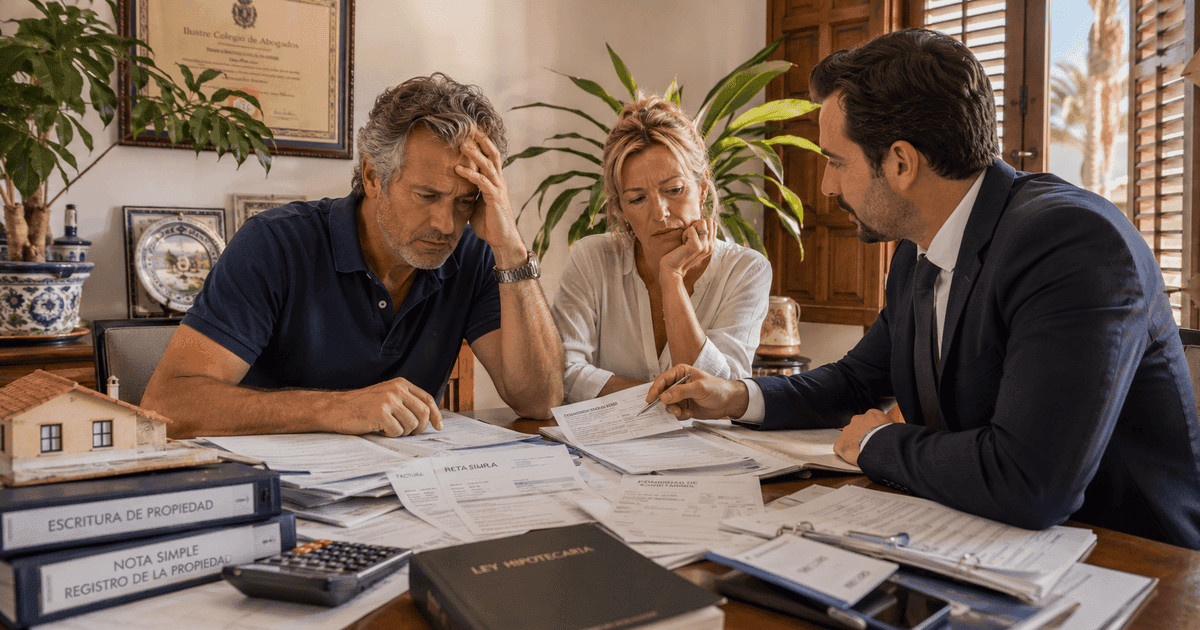
5 Mistakes to Avoid When Buying Property in Spain
5 Mistakes to Avoid When Buying Property in Spain
Buying a property in Spain is one of the most exciting decisions you can make - but it is also one where costly mistakes are surprisingly easy to make, especially if you are purchasing from abroad. At RBplace, we have guided dozens of Swiss and European buyers through the process, and we see the same pitfalls come up again and again. Here are the five most common mistakes, and how to avoid them.
Mistake #1: Not Hiring an Independent Lawyer
This is by far the most frequent - and most expensive - mistake foreign buyers make in Spain.
Many buyers assume that the notary will protect their interests. In Spain, the notary's role is to authenticate the transaction, not to advise either party. They verify that the deed is legally valid, but they will not check whether the property has outstanding debts, illegal extensions, or planning permission issues.
What you should do instead: Hire an independent Spanish lawyer (abogado) who works exclusively for you - not for the seller, not for the developer, and not for the real estate agency. Your lawyer should conduct full due diligence on the property, including:
Checking the Land Registry (Registro de la Propiedad) for debts, mortgages, or liens
Verifying planning permissions and building licences
Confirming the property matches its legal description
Reviewing the purchase contract before you sign
Budget approximately 1% of the purchase price for legal fees. It is money very well spent.
Mistake #2: Skipping the NIE Before Finding a Property
The NIE (Número de Identificación de Extranjero) is Spain's tax identification number for foreign nationals. Without it, you cannot sign at the notary, open a Spanish bank account, or pay your taxes.
Many buyers only start the NIE process once they have found their dream property - and then face delays that jeopardise the entire transaction. In some cases, sellers have walked away because the buyer was not ready to proceed.
What you should do instead: Apply for your NIE as early as possible, ideally before you even start viewing properties. The process can take several weeks, especially if done through a Spanish consulate in Switzerland. RBplace can guide you through this step to avoid any unnecessary delays.
Mistake #3: Underestimating the Total Cost of Purchase
The asking price of a property in Spain is never the final price you pay. Many first-time buyers are caught off guard by the significant additional costs that come on top.
As a general rule, budget 12% to 15% on top of the purchase price to cover:
Property Transfer Tax (ITP): 8% to 10% for resale properties (varies by region)
VAT (IVA): 10% for new-build properties
Stamp Duty (AJD): 0.5% to 1.5%
Notary fees: approximately 0.5%
Land Registry fees: approximately 0.4%
Legal fees: approximately 1%
Failing to account for these costs can seriously disrupt your financing plan - or force you to pull out of a purchase at the last minute.
Mistake #4: Buying Without a Thorough Property Survey
In Switzerland, property surveys are standard practice. In Spain, they are far less common - and many buyers skip them entirely, trusting that what they see is what they get.
This can lead to very unpleasant surprises after completion: structural issues, damp, illegal extensions that cannot be regularised, or properties built partially on protected land.
What you should do instead: Always commission an independent structural survey (inspección técnica) before signing the purchase contract, particularly for older properties or rural homes. The cost is modest - typically between €300 and €600 - compared to the potential repair bills it could save you.
For new-build properties, ensure that the developer holds all required licences and that the property has a valid Licencia de Primera Ocupación (first occupation licence) before completion.
Mistake #5: Letting Emotions Drive the Decision
Spain has a way of making people fall in love - with the climate, the lifestyle, the food, the pace of life. And when you find a property that feels like your dream home, it is very easy to let excitement cloud your judgement.
We have seen buyers overlook serious red flags - a property without planning permission, a seller with outstanding debts on the home, or a location that floods in winter - simply because they were emotionally attached to the idea of the purchase.
What you should do instead: Take your time. A trustworthy real estate agency will never pressure you into a decision. Ask questions, request all documentation, and always sleep on it before signing anything. If something does not feel right, it probably is not.
Having a knowledgeable local partner by your side - one who knows the market, speaks the language, and understands both Spanish and Swiss expectations - makes all the difference.
Final Thoughts
Buying property in Spain should be a joyful experience, not a stressful one. The vast majority of transactions go smoothly when buyers are well-prepared and well-advised. By avoiding these five common mistakes, you put yourself in the best possible position to find the right property, at the right price, with complete peace of mind.
At RBplace, we are with you every step of the way - from your first property search to the moment you receive the keys. Our team combines Swiss precision with deep local expertise on the Costa Blanca, Murcia, and Costa de Almería.
Get in touch today for a free, no-obligation consultation.
This article is provided for informational purposes only and does not constitute legal or financial advice. We recommend consulting a qualified professional for your personal situation.