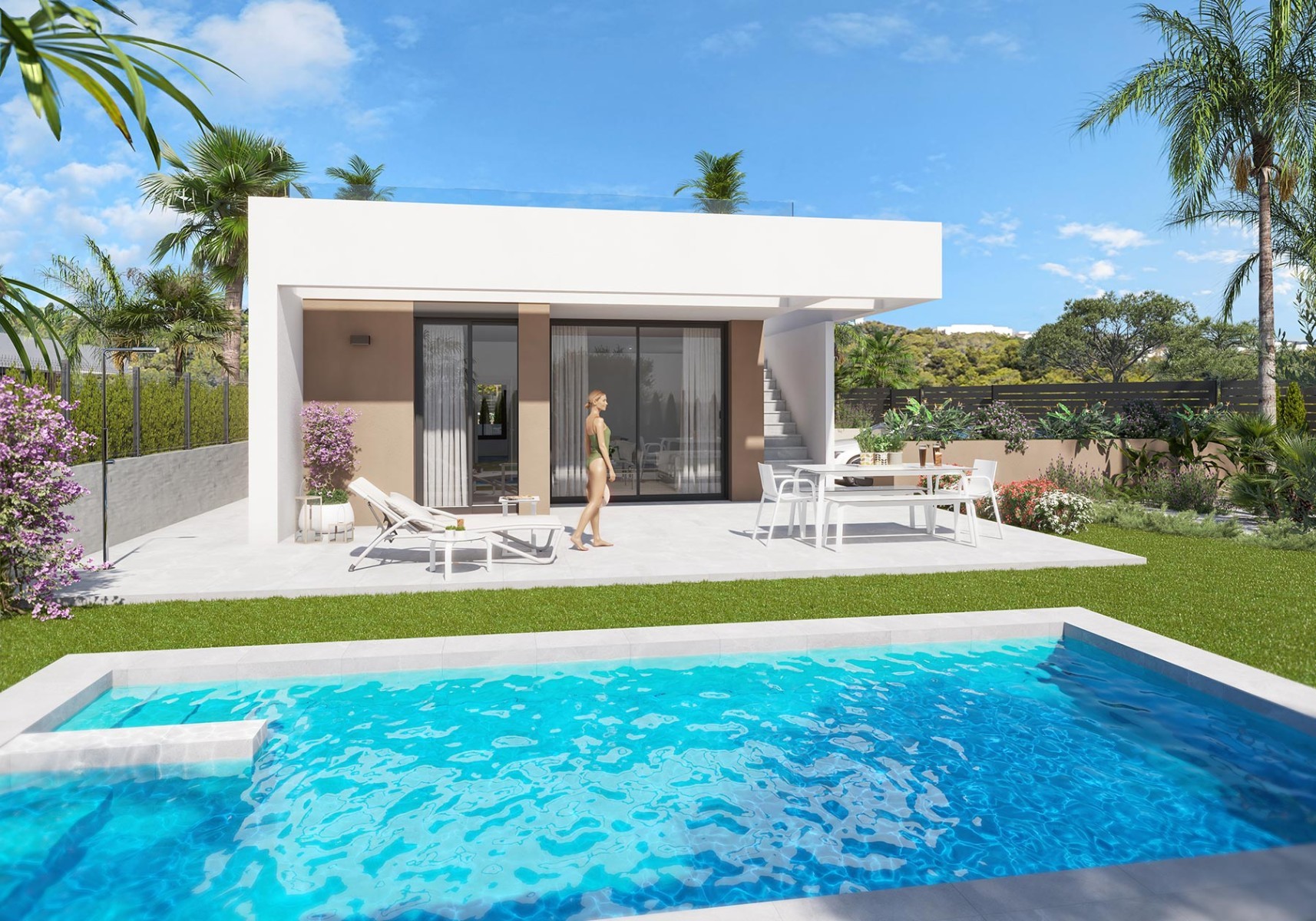
Costa de Almería: the Spanish coast that is still affordable in 2026
Prices, taxes, towns and the high-speed line: why the Costa de Almería is the last affordable stretch of Spain's Mediterranean coast
By RB Place, estate agency for the Costa Blanca, Costa Cálida and Costa de Almería
The Costa de Almería is one of the few stretches of Spain's Mediterranean coast where a new apartment near the beach still sells well below Costa Blanca and Costa del Sol prices. Prices are rising fast, the high-speed rail line is being laid, and most buyers from Switzerland, France and Belgium have not yet looked this far south. This guide explains what the coast offers, what it costs, how Andalusian taxes compare with the Valencia region and Murcia, and what to check before you buy. The detail sits inside the FAQ sections, so you can read fast and open only what you need.
⚠️ Prices and tax rules move quickly. The market figures below are idealista asking prices for August 2026 and the tax rates are the general 2026 rates, before reduced rates for young buyers, large families or main residences. Confirm them on the official sources at the end before you commit.
In a nutshell
Average asking price in Almería province: 1,667 euros per m² in August 2026, against 2,759 euros in Alicante province and 4,293 euros in Málaga province.
Prices rose 15.8% in a year, with Vera at 2,455 euros per m² and Mojácar at 2,633 euros per m².
New-build homes on this coast in the RB Place catalogue in October 2026: from 180,000 euros for a one-bedroom apartment in Vera to 692,000 euros, with three-bedroom villas from about 430,000 euros.
Tax on a new build: 10% VAT plus 1.2% stamp duty in Andalusia, the lowest combined rate of the three regions we cover.
Resale transfer tax: 7% in Andalusia, against 9% in the Valencia region (11% above 1 million euros).
Wealth tax: Andalusia's regional rebate means that, in practice, nothing is due below roughly 3.7 million euros of net taxable assets per person.
Where is the Costa de Almería, and why is it still affordable?
The Costa de Almería runs along the coast of Almería province, in the south-east corner of Andalusia, between the Costa Cálida (Murcia) to the north and the Costa Tropical (Granada) to the west. For buyers from abroad, the interesting part is the northern stretch, the Levante Almeriense: Vera, Garrucha, Mojácar, San Juan de los Terreros and Pulpí. Further south lies the Cabo de Gata-Níjar natural park, protected and largely unbuilt, then the city of Almería and its airport.
The coast stayed cheaper for three practical reasons. It is further from the big airports that feed the Costa Blanca. Until now it has had no high-speed rail link. And the international market here has been dominated by British buyers, so demand from the rest of Europe is only now picking up. The result is a coast with the same climate as its neighbours, fewer crowds and lower prices.
Frequently asked questions
Which towns count as the Costa de Almería? The whole coastline of Almería province, from Pulpí and San Juan de los Terreros in the north, through Vera, Garrucha and Mojácar, down past Cabo de Gata to Almería city, Roquetas de Mar and Adra. Most new-build activity for foreign buyers is in the northern section around Vera and Mojácar.
What is the climate like? The province is one of the driest and sunniest areas in Europe, with over 3,000 hours of sunshine a year and mild winters. Inland sits the Tabernas desert, Europe's only true desert, which gives a sense of how little it rains.
Is the coast built up? Far less than the Costa Blanca or the Costa del Sol. Cabo de Gata is a natural park with no large developments, and even the resort areas around Vera and Mojácar are low-rise compared with Benidorm or Torrevieja.
The Costa de Almería property market in 2026: prices and trends
Almería province is still the cheapest of the three Mediterranean provinces we cover, but it is no longer standing still. According to idealista, the average asking price in the province reached 1,667 euros per m² in August 2026, up 15.8% in twelve months. The coastal towns are higher: Vera at 2,455 euros per m² (up 17.5%), Mojácar at 2,633 euros per m² (up 16%) and Garrucha at 2,070 euros per m², which rose 33% in a year. For comparison, Alicante province averaged 2,759 euros per m² and Málaga province 4,293 euros per m² in the same month. These are provincial averages across all property types, inland included, so they show the gap between the three markets rather than the price of a new home by the beach.
The international share is also smaller. According to Fotocasa, based on Land Registrars data published in early 2026, foreign buyers accounted for around 17.6% of purchases in Almería province, against roughly 44% in Alicante province in 2024. That gap is one reason the coast remains cheaper, and one reason the room for growth is real.
Frequently asked questions
Are prices on the Costa de Almería likely to keep rising? The province recorded some of the fastest annual price growth in Spain in 2026, from a low base. Tight supply of quality new build on the coast, the planned high-speed rail line and a growing non-British buyer base all point to continued growth, though nobody can promise a rate, and the railway's effect on prices remains a hypothesis until it opens.
How do prices compare with the Costa Blanca South? A three-bedroom new-build villa in Vera is listed from about 430,000 euros in our catalogue. On the Costa Blanca South, a comparable new villa in Torrevieja or Orihuela Costa usually starts higher. Apartments show a similar gap: a two-bedroom new-build in Vera from 210,000 euros. Compare like with like, by town and property type, rather than relying on the provincial averages above.
Which nationalities buy here? British buyers have long led the market, followed by Belgian, Dutch and German buyers. Swiss and French buyers are still rare, so the coast is less exposed to the demand that pushed Costa Blanca prices up.
Where to buy on the Costa de Almería
Vera and Vera Playa concentrate most of the new-build activity. The town sits a few kilometres inland, with a long sandy beach area at Vera Playa and a mix of contemporary villa developments and apartment complexes a short drive from the sea. Vera is also where the new high-speed rail station will be built. In our catalogue it is by far the largest stock on this coast, with apartments, penthouses and villas in Vera from 180,000 euros.
Mojácar is the best-known name. The whitewashed village on the hill is one of the most photographed in Andalusia, and the beach area below runs for 17 kilometres. Of the main towns on this coast, it has the highest asking price per m² in idealista's August 2026 data, and the strongest tourism brand. Our catalogue has new-build apartments, bungalows and penthouses in Mojácar from around 370,000 euros.
Garrucha is a working fishing port with a marina, a long seafront and the famous red prawns. It has fewer new-build projects but is a good option for buyers who want an authentic town rather than a resort.
San Juan de los Terreros and Mar de Pulpí are the northern tip of the coast, next to the Murcia border, with front-line developments at accessible prices. Our catalogue has villas in San Juan de los Terreros and bungalows and villas in Mar de Pulpí from about 370,000 euros.
Frequently asked questions
Which is better for rental income, Vera or Mojácar? Mojácar has the stronger brand and the longer season, so it tends to rent more easily. Vera offers lower entry prices and newer stock. Both are subject to the Andalusian tourist-letting rules and the community-of-owners rules described below.
Is Vera Playa a naturist resort? Part of it is. Vera Playa has one of the best-known naturist zones in Spain, concentrated in a specific area of the beach and a few residential complexes. Most of the town and the new developments are ordinary family resorts, so check the exact location of any property you consider.
What about Almería city and Roquetas de Mar? Both are further south and have a more Spanish, year-round market. They are good value but less focused on foreign holiday buyers, and we do not currently list new-build projects there.
What does a new-build home cost on the Costa de Almería?
In October 2026 our catalogue lists around 30 new-build homes on this coast, almost all in Vera, with the rest in Mojácar, Mar de Pulpí and San Juan de los Terreros. The entry point is a one-bedroom apartment in Vera at 180,000 euros. Two-bedroom apartments start at 210,000 euros, three-bedroom apartments at about 240,000 euros, and penthouses at 264,000 euros. Three-bedroom villas with private pool start at about 430,000 euros in Vera and run to 585,000 euros in San Juan de los Terreros, while the most expensive listing is a three-bedroom bungalow in Mojácar at 692,000 euros. Stock and prices change with every update of the catalogue.
As a budgeting rule, allow about 12% to 14% on top of the price for taxes and fees on a new build, depending on your lawyer's fees and whether you finance, as explained in the next section. Most of the developments we list are sold off plan with delivery in 12 to 24 months, and Spanish law requires the developer to secure the payments you make before completion with a bank guarantee or a surety insurance policy, from the moment the building licence is granted. You can browse the full selection on our Costa de Almería page, or go straight to villas or apartments.
Frequently asked questions
What do you get for 250,000 euros? In Vera, a new two- or three-bedroom apartment of 70 to 90 m² in a complex with communal pool, usually within a short drive of the beach, sometimes with a solarium if you take a penthouse.
What do you get for 450,000 euros? A new three-bedroom villa in Vera with private pool and a plot of 240 to 420 m², or a two-bedroom bungalow in Mojácar close to the beach.
Are the homes furnished? In the developments we list, a fitted kitchen and pre-installation for air conditioning are usually included; check the specification of each project. RB Place can arrange furniture and lighting packs installed before you arrive.
Is my reservation deposit protected? The legal guarantee covers the amounts paid on account of the price once the building licence has been granted, plus the applicable tax and legal interest. A reservation fee paid before that point may not be covered, so ask for the guarantee or insurance certificate before each payment.
Taxes and fees in Andalusia compared with the Valencia region and Murcia
This is where the Costa de Almería scores a second time. Andalusia has one of the simplest and lowest property tax regimes in Spain. The rates below are the general rates; reduced rates exist in each region for main residences, young buyers, large families and people with a disability.
On a new build, you pay 10% VAT (a national rate) plus stamp duty (AJD), which Andalusia sets at 1.2%. The combined rate is 11.2%, against 11.4% in the Valencia region (AJD 1.4% since June 2026) and 11.5% in Murcia (AJD 1.5%). On a resale, the transfer tax (ITP) is a flat 7% in Andalusia, against 9% in the Valencia region (11% on the part above 1 million euros) and 7.75% in Murcia. Add notary and land registry fees, a lawyer and, if you finance, valuation and mortgage costs, and the total comes to roughly 12% to 14% on a new build.
Once you own, the annual costs are the same as elsewhere in Spain: council tax (IBI), community charges, and non-resident income tax on a notional rent. The notable difference is wealth tax. Andalusia introduced a 100% rebate on the regional wealth tax in 2022. While the national solidarity tax on large fortunes is in force, that rebate operates as a differential rebate coordinated with the national tax: below the national threshold nothing is due, and above it you pay once, not twice. With the 700,000 euro exemption and a first band taxed at 0% up to 3 million euros, the effective threshold is about 3.7 million euros of net taxable assets per person in a simple case. The actual position depends on the assets, deductible debts, residence and the coordination rules, so take advice.
Frequently asked questions
Can a non-resident benefit from the Andalusian wealth tax rebate? Since the 2021 reform, non-residents can opt to apply the rules of the region where their Spanish assets are located, and this is no longer limited to EU residents. A Swiss resident with a home in Almería can therefore use the Andalusian rules. Confirm your position with a Spanish tax adviser, as the obligation to file a return can remain even when nothing is due.
Is non-resident income tax different in Andalusia? No, it is a national tax. Residents of Switzerland pay 24% on the notional rent or on actual rental income without deductions, while EU residents pay 19%. Our tax guide for Swiss buyers covers this in detail.
On what value are the purchase taxes calculated? It depends on the tax. VAT on a new build is calculated on the price actually paid. Transfer tax (ITP) on a resale is calculated on the cadastral reference value set by the tax office, or on the price or declared value if higher. Stamp duty (AJD) on a new build follows the same rule as ITP, so the reference value can also come into play there. Ask your lawyer to check the reference value before signing.
Holiday letting on the Costa de Almería: the Andalusian rules
Andalusia regulates tourist lets through its own decree, updated in February 2024. A home let to tourists must be registered in the Andalusian Tourism Register and meet the conditions on habitability, equipment and insurance. The registration number must appear in every advert. Since 2024, town halls can limit the number of tourist homes by area.
The community of owners also has a say, and this changed in 2025. Since 3 April 2025, an owner who wants to start tourist letting in a building subject to the horizontal property regime needs the prior and express approval of the community, by a majority of three-fifths of the owners and of the shares. The absence of a ban in the statutes is no longer enough. Activities that were lawfully running before that date benefit from transitional rules.
Before buying with letting in mind, check three things: that the municipality has not capped tourist lets in that zone, that the community has approved tourist use or will do so, and that the property has the documents required for registration. Your lawyer can verify all three before you pay a deposit.
Frequently asked questions
Do I need a licence to let on a tourist basis in Andalusia? Not a licence in the classic sense. You file a responsible declaration, register in the Andalusian Tourism Register and meet the technical conditions. Letting without registration is fined.
What yield can I expect? It varies by town, property type and management. Treat any figure as a dated estimate rather than a promise, and remember that the season on this coast is shorter than on the Costa del Sol.
Does the national short-term rental register apply? On 19 May 2026 the Supreme Court partially annulled Royal Decree 1312/2024, striking down the single national register and the digital one-stop registration procedure (ruling published in the Official Gazette on 8 June 2026). The rest of the decree stands. The regional Andalusian register remains mandatory, and the national duty to report guest data to the police still applies. Check the latest position before you let.
How to get to the Costa de Almería
The nearest airport is Almería (LEI), 30 to 60 minutes from most resorts. Its network is seasonal and changes from year to year: in summer 2026 it served around twenty destinations, mostly in the United Kingdom, with direct links to Belgium, Luxembourg and the Netherlands. There are currently no direct flights from Switzerland. Murcia-Corvera airport is about an hour from the northern towns, and Alicante airport, with its wide choice of flights from Switzerland, France and Belgium, is around two hours away by motorway.
The big change is the railway. The Murcia-Almería high-speed line is under construction along the whole route, track is being laid between Vera and Almería, and on 21 April 2026 the Spanish government authorised the tender for a new station at Vera-Almanzora. The Corredor Mediterráneo platform currently expects the full line to open in 2028 or 2029. Treat that as a forecast: the opening date, the services that will stop at Vera and any effect on property prices are not guaranteed.
Frequently asked questions
How do I get there from Switzerland? Fly to Alicante or Murcia and drive, or fly to Almería with a connection. RB Place organises viewing trips of one to three days with a French-speaking adviser on site; see our viewing trips page.
Is a car necessary? Yes. The coast is spread out, public transport between towns is limited, and most new developments are a short drive from the beach rather than on it.
Checks to make before buying on the Costa de Almería
The list is the same as anywhere in Spain, with two local points. First, on any property close to the sea, have your lawyer check the official coastal boundary (the deslinde) and the easements under the Spanish Coastal Law, which protects the public maritime domain and restricts building in a zone behind it. A clean land registry record and a valid first-occupation licence do not settle this question on their own, because the registry does not prevail over the public domain classification. Second, if letting matters to you, check the municipal and community rules described above before you commit.
Beyond that, order the land registry extract (nota simple), confirm the developer's building licence and the guarantee or insurance on your payments, have your NIE ready and use an independent lawyer. RB Place handles the NIE, the Spanish bank account and the coordination with notary, bank and lawyer, as described on our administrative support page.
Frequently asked questions
What is the Coastal Law issue? The Ley de Costas defines a public strip along the shoreline, where private ownership is not possible, and a protection zone behind it with building restrictions. A few older developments on this coast had problems with it. The only reliable check is the official deslinde for the exact plot, which your lawyer can obtain from the coastal authority.
How does RB Place help with a purchase here? We select the developments, organise the viewing trip, check the developer and the contract, follow the build with photos, and are present at the handover. The service is free for the buyer, as the developer pays our commission. See our new-build homes page.
Recent changes affecting the Costa de Almería (2024 to 2026)
February 2024: Andalusia updates its tourist-letting decree and lets town halls cap tourist homes by area.
3 April 2025: the property Golden Visa ends; starting tourist letting in a building now requires the prior approval of the community of owners by a three-fifths majority.
21 April 2026: the Spanish government authorises the tender for the Vera-Almanzora high-speed station.
19 May 2026: the Supreme Court partially annuls Royal Decree 1312/2024, including the single national register for short-term lets (published 8 June 2026); the Andalusian register remains mandatory.
1 June 2026: the Valencia region cuts its stamp duty to 1.4% and its general transfer tax to 9%, narrowing but not closing the gap with Andalusia.
August 2026: idealista records 15.8% annual price growth in Almería province, among the highest in Spain.
Final thoughts before you buy on the Costa de Almería
The case for the Costa de Almería is simple: the same sea and the same sun as the Costa Blanca, at a lower price, with a lighter tax regime and a railway on the way. The trade-offs are also simple: a longer journey from Switzerland, a shorter tourist season and a coast that is still developing. For a buyer who wants a new home near the beach without paying Costa Blanca prices, and who does not mind driving from Alicante or Murcia, it is one of the better opportunities on the Spanish coast in 2026.
At RB Place, we support our clients at every stage, from finding the property through to signing, including the administrative and tax formalities.
Sources and official references
Asking prices, Almería, Alicante and Málaga provinces, August 2026: idealista price reports, Almería province, Málaga province
Share of foreign buyers by Andalusian province (Fotocasa, based on Land Registrars data): fotocasa.es
Transfer tax and stamp duty rates in Andalusia (Law 5/2021 on ceded taxes): Junta de Andalucía, ITP and AJD rates
Wealth tax rebate in Andalusia and coordination with the solidarity tax: Junta de Andalucía, wealth tax measures
Solidarity tax on large fortunes (Law 38/2022, article 3): BOE-A-2022-22684
Non-resident income tax (Royal Legislative Decree 5/2004): BOE-A-2004-4527
Tax base for ITP and AJD (reference value, Law 11/2021): BOE-A-2021-11473; VAT base: Spanish Tax Agency
Community approval for tourist lets (Horizontal Property Law, article 17.12, as amended in 2025): BOE-A-1960-10906
Guarantees on off-plan payments (Law 20/2015, first additional provision): BOE-A-2015-7897
Tourist lets in Andalusia (Decree 28/2016 as amended by Decree 31/2024): Junta de Andalucía, tourist homes
Supreme Court ruling of 19 May 2026 on Royal Decree 1312/2024: BOE-A-2026-12300
Coastal Law (Law 22/1988): BOE-A-1988-18762
Vera-Almanzora high-speed station, Council of Ministers of 21 April 2026: transportes.gob.es
Murcia-Almería line status and opening forecast: Corredor Mediterráneo platform, elcorredormediterraneo.com
Almería airport destinations (seasonal): Aena, aena.es
Tourism information on the Costa de Almería: andalucia.org
This article is for information only and is not tax or legal advice. Spanish property tax and regulation change often and can vary by municipality; consult a qualified professional about your own situation. Information current as of October 2026.