Bungalow, chalet, villa or penthouse? The property types on the Spanish coast explained
Apartment, penthouse, studio, bungalow, chalet, villa: what each property type means on the Spanish coast, with a photo of each and the Spanish terms to know
By RB Place, estate agency for the Costa Blanca, Costa Cálida and Costa de Almería
A Spanish bungalow is not a bungalow. A chalet has nothing to do with the mountains. And a penthouse is often on the second floor. If you are browsing new homes on the Spanish coast from Switzerland, France or Belgium, the property types in the listings follow Spanish usage, and the words do not mean what they mean at home. This short guide explains each type as it appears in our catalogue, with a photo of a real listing, what to check before you choose one, and the Spanish terms you will meet in the contract.
ℹ️ The definitions below follow the way developers on the Costa Blanca, Costa Cálida and Costa de Almería classify their homes, which is also how our catalogue is organised. Other agencies and other regions of Spain sometimes use the same words differently, so always read the plans and the specification rather than the label alone.
In a nutshell
Apartment: a flat in a block, usually with communal pool and gardens.
Penthouse: the top-floor apartment, with a private solarium on the roof.
Studio: a one-room apartment, rare in new developments.
Bungalow: a small two-level building where you buy either the ground floor with garden or the upper floor with solarium.
Chalet: a house over two floors sharing one or two walls with its neighbours, with its own plot, terrace and often a solarium.
Townhouse: the same kind of terraced house; our developers mostly call it a chalet.
Villa: a detached house on its own plot, usually with a private pool.
Apartment
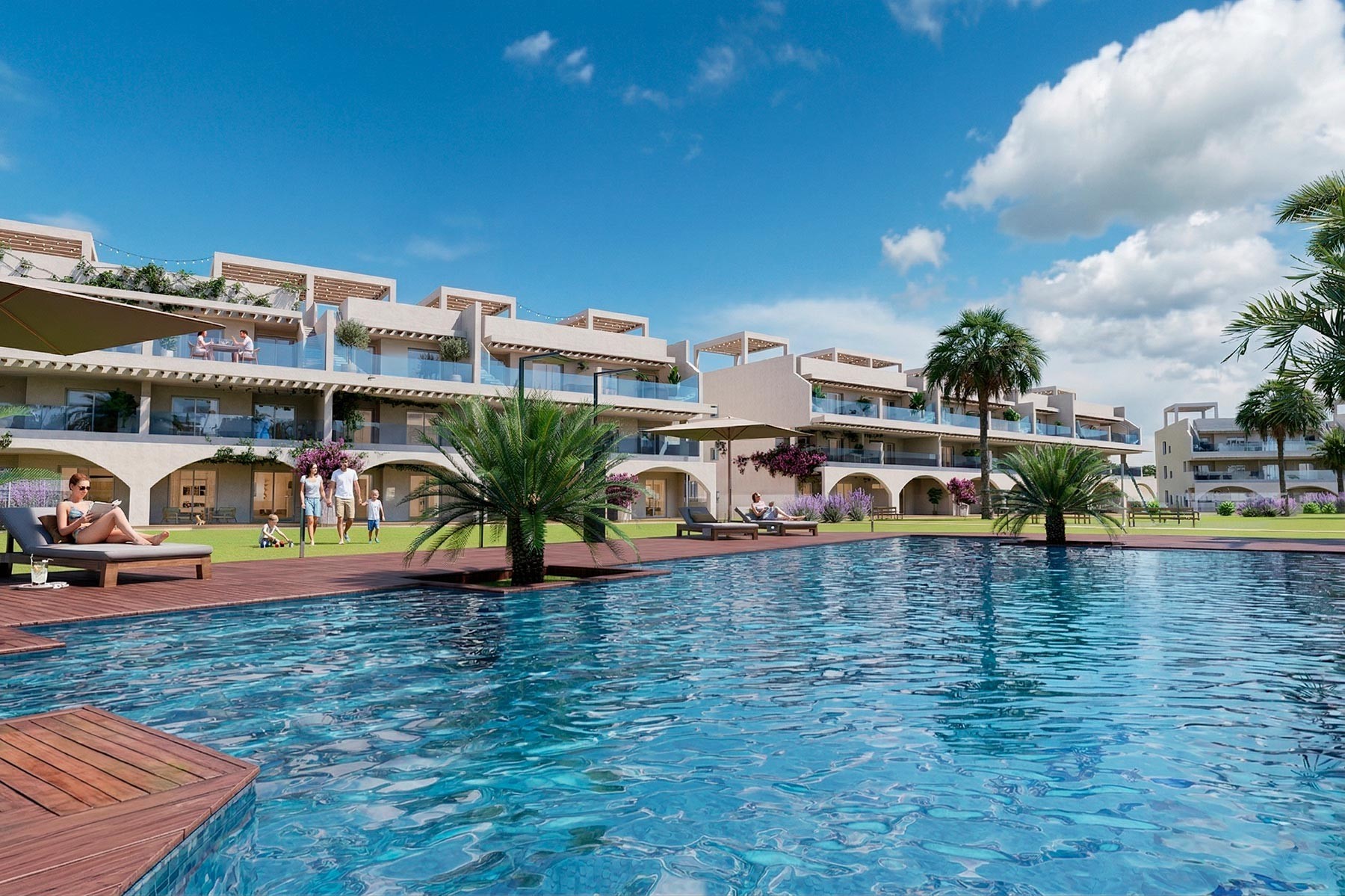
The most common type on the coast and the cheapest way into a new development. Apartments sit in low-rise blocks of two to four floors inside a gated complex (an urbanización) with communal pool, gardens and parking. Ground-floor units often have a private garden or large terrace, upper floors have balconies. Most new apartments come with two or three bedrooms, a fitted kitchen and pre-installed air conditioning, and sizes run from 60 to 110 m² indoors.
Where to look: apartments on the Costa Blanca South, on the Costa Cálida and on the Costa de Almería.
Frequently asked questions
What do the community fees cover? Pool, gardens, lifts, lighting of common areas, insurance of the building and sometimes security. For a new complex expect 60 to 150 euros a month, more for resorts with golf or spa.
Is a ground-floor apartment a good idea? For a garden and easy access, yes. Check privacy from the pool area and whether the garden is private or part of the communal grounds.
Penthouse

A penthouse (ático) is the apartment on the top floor of the block, and what makes it a penthouse is the private solarium on the roof: an open terrace, often as large as the apartment itself, with a summer kitchen, a pergola and sometimes a jacuzzi. Because new blocks on the coast are low, the top floor can be the second or third, so the view depends on the site rather than the height. Penthouses carry a premium of 15% to 30% over the apartment below and are the most sought-after units in a development, so they sell first.
Where to look: penthouses on the Costa Blanca South and on the Costa de Almería.
Frequently asked questions
Is the solarium included in the price? Yes, it is part of the unit. Check in the plans whether it is reached by an internal staircase or from the common stairwell, and whether a summer kitchen is included or optional.
Does a penthouse cost more to run? Slightly: the roof terrace needs maintenance and the top floor gets more sun, so air conditioning works harder. Good insulation on the roof is worth asking about.
Studio
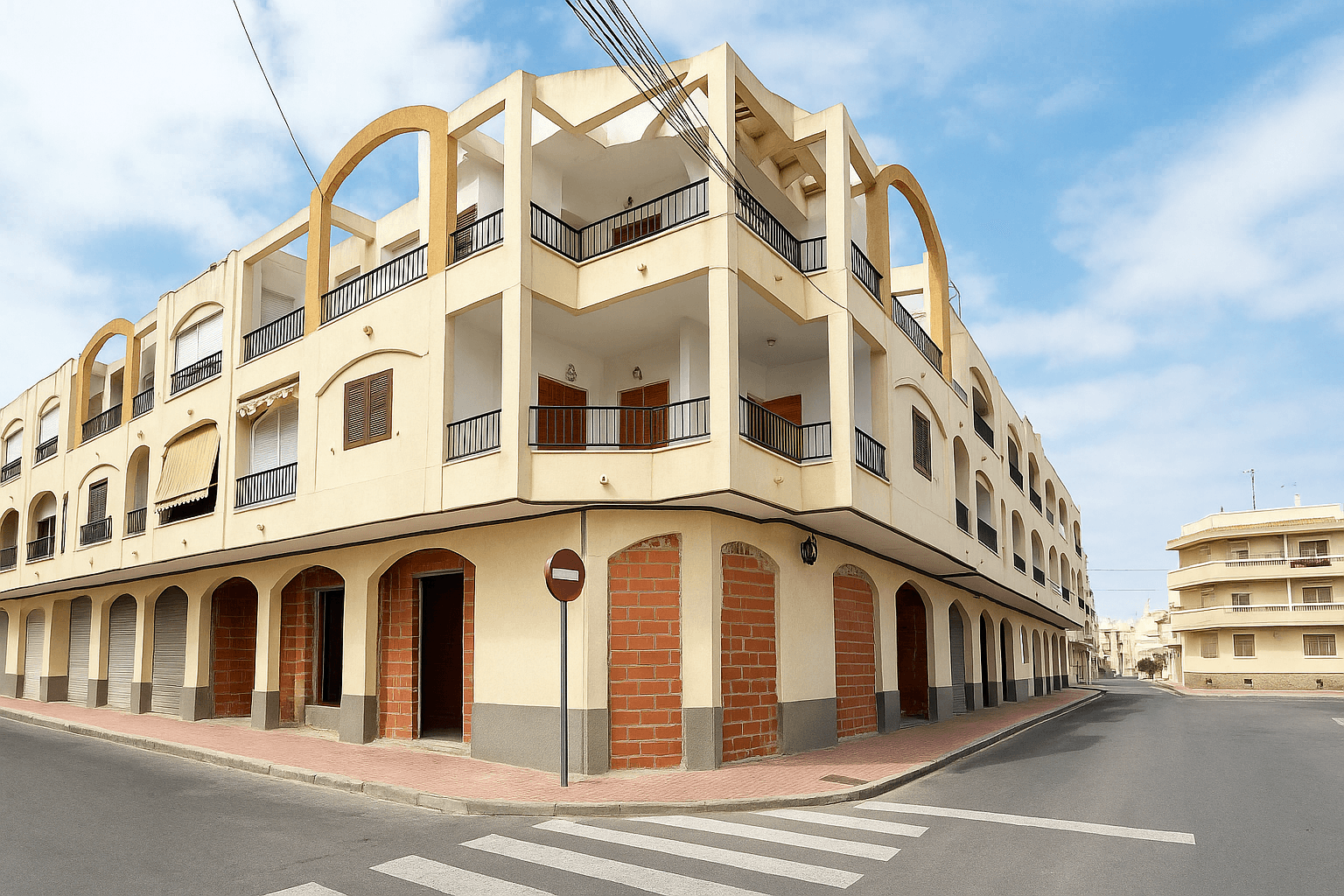
A studio (estudio) is a single room with kitchen area and a separate bathroom, usually 35 to 50 m². Studios are rare in new developments on the coast, which are built for families and holiday rentals, so the few that exist are in town-centre projects a short walk from the beach. They suit a buyer who wants a pied-à-terre at the lowest possible entry price, and they rent easily for short stays.
Where to look: studios on the Costa Blanca South.
Frequently asked questions
Can I let a studio to tourists? The same rules apply as for any home: regional tourist registration, and since April 2025 the prior approval of the community of owners. Check both before you buy with letting in mind.
Bungalow
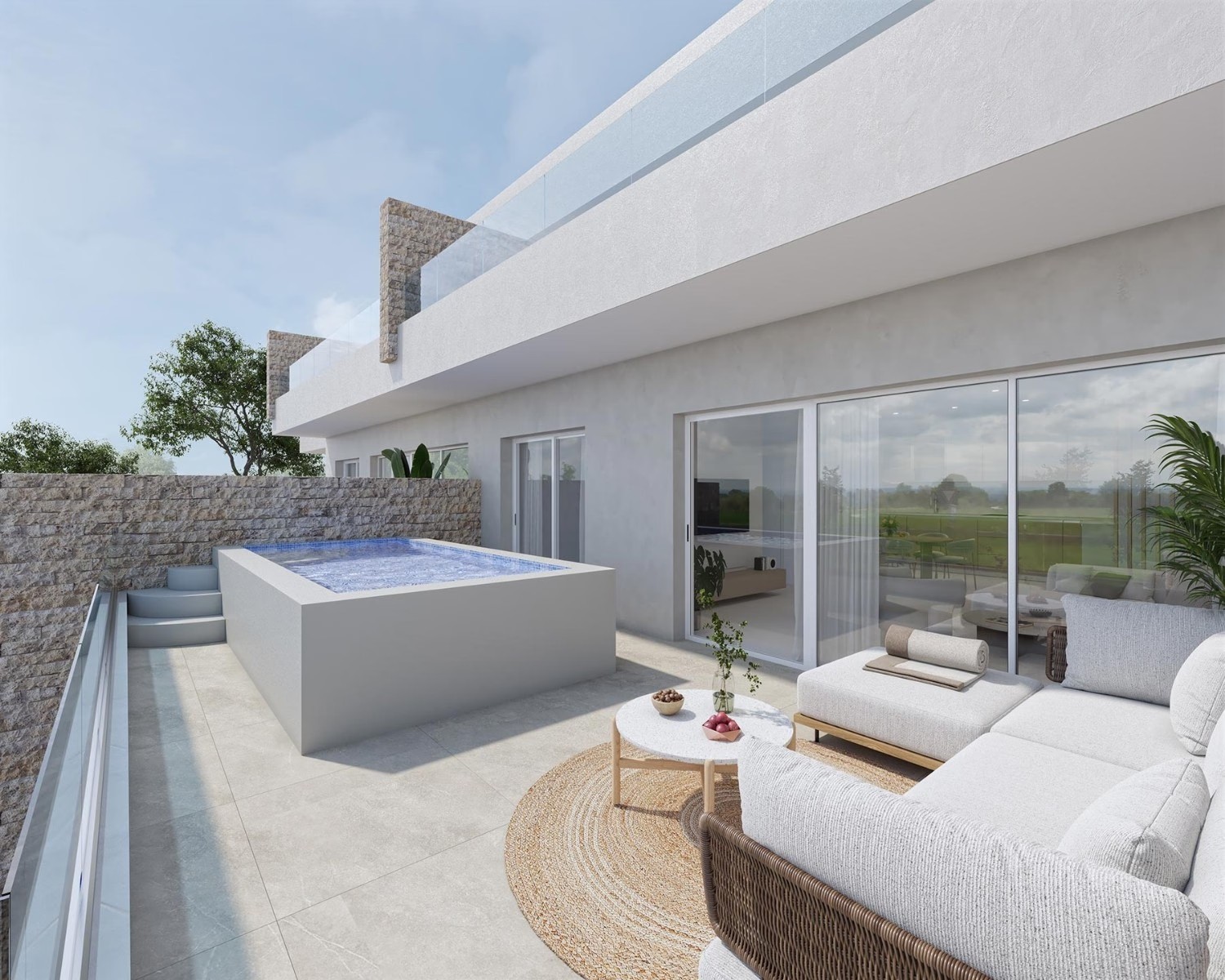
This is the word that confuses everyone. In Switzerland or France a bungalow is a single-storey house. On the Spanish coast a bungalow is a small building of two levels, each level being a separate home: you buy either the ground floor (planta baja), which comes with a private garden, or the upper floor (planta alta), which comes with a private solarium on the roof. The two homes share the staircase and the plot, and the building sits in a row of similar bungalows inside a complex with communal pool. A bungalow is therefore neither a single-storey house nor a duplex, but a half of a two-family building, and it is the most affordable way to get a private outdoor space of your own.
Where to look: bungalows on the Costa Blanca South, on the Costa Cálida and on the Costa de Almería.
Frequently asked questions
Ground floor or upper floor? Ground floor for the garden, direct access and families with small children; upper floor for the solarium, the views and more privacy. Prices are usually similar, the upper floor sometimes a little higher.
Are the two homes legally separate? Yes. Each has its own deed, its own registry entry and its own share of the community. You do not depend on your neighbour below or above.
Chalet (and townhouse)
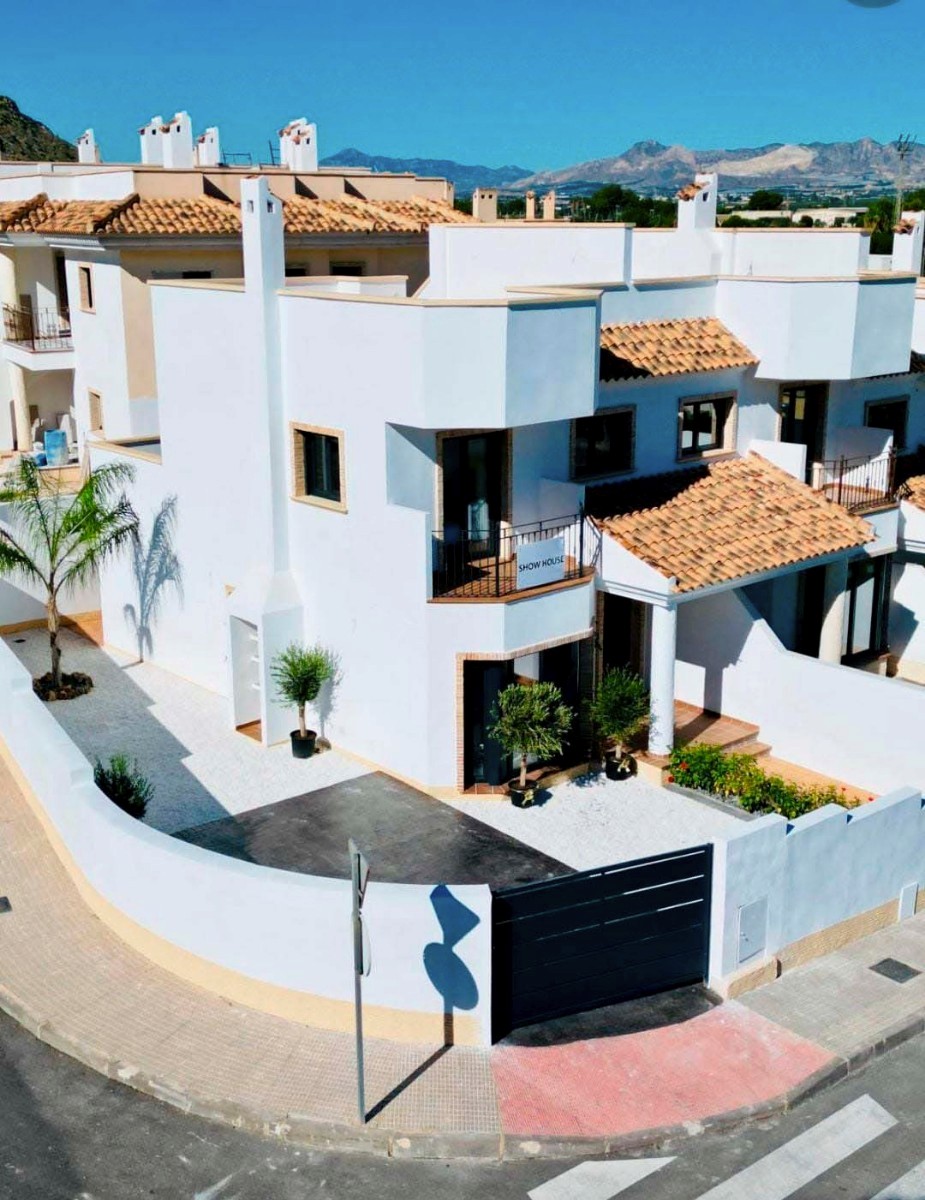
In Spanish, chalet simply means a house, and on the coast our developers use it for a house over two floors that shares one or both side walls with its neighbours: a terraced or semi-detached house (adosado or pareado). A chalet has its own small plot with a terrace or garden, parking on the plot, often a private solarium on the roof, and sometimes room for a small private pool. It is the family house of the Spanish coast, between the bungalow and the villa in price. The word townhouse describes the same thing and appears occasionally in our listings; in practice, almost everything of this kind in our catalogue is filed under chalet.
Where to look: chalets on the Costa Blanca South, on the Costa Cálida and on the Costa de Almería.
Frequently asked questions
Is a chalet detached? Usually not. A detached house is listed as a villa. A chalet shares at least one wall, which is also why it costs less and needs less land.
Can I add a private pool? Often, as an option from the developer if the plot allows it. Ask for the price and the delivery date of the pool separately, since it is sometimes finished after the house.
Villa
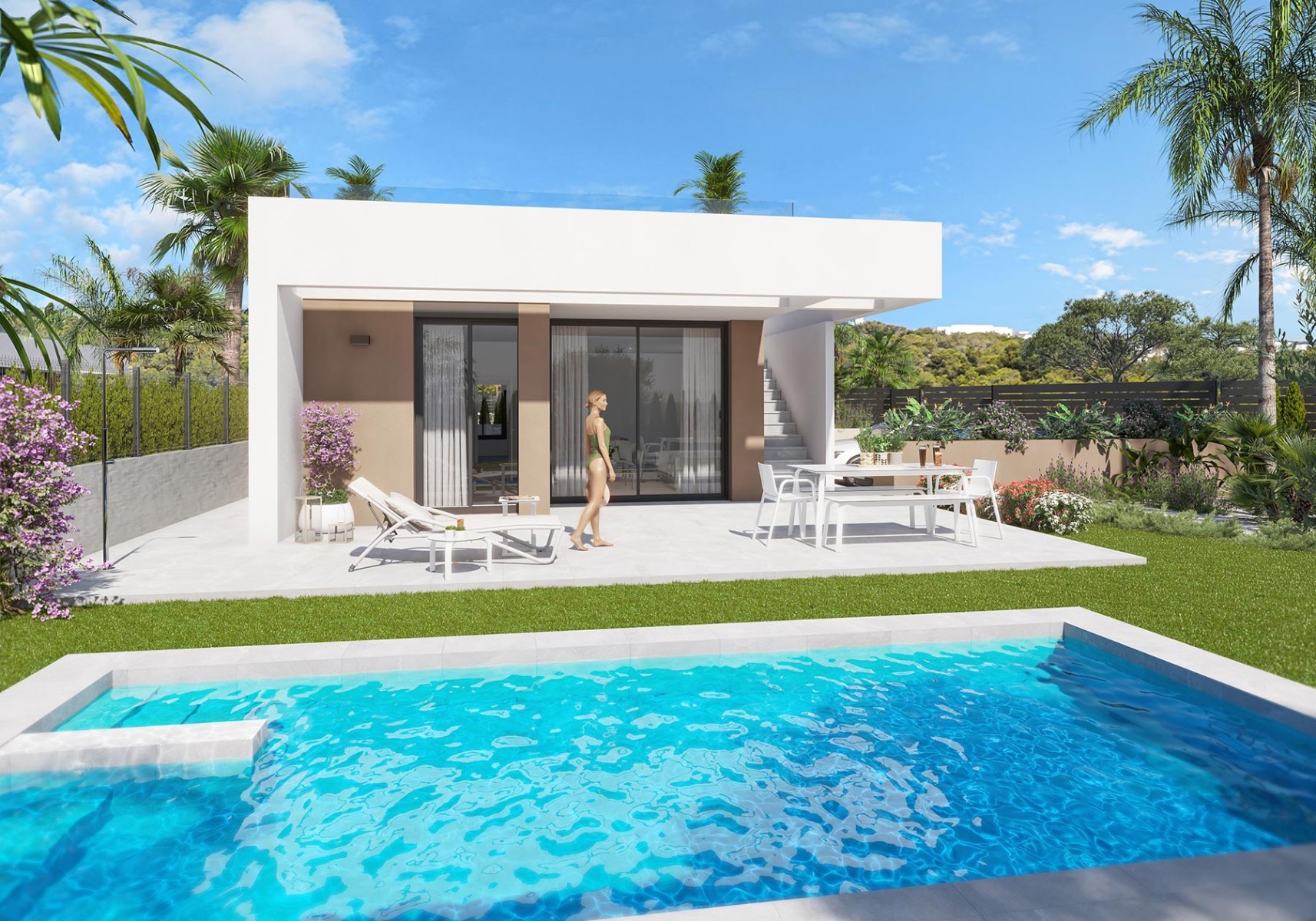
A villa is a detached house (chalet independiente) on its own plot, with no shared walls, almost always with a private pool and usually with a solarium or roof terrace. New villas on the coast run from 90 to 200 m² indoors on plots of 250 to 500 m², with three or four bedrooms, and most are built on golf resorts or in villa-only developments a short drive from the beach. Prices start around 400,000 euros on the Costa Blanca South and the Costa de Almería, and rise quickly with the plot size, the sea view and the resort.
Where to look: villas on the Costa Blanca South, on the Costa Blanca North, on the Costa Cálida and on the Costa de Almería.
Frequently asked questions
Does a villa in a complex still pay community fees? Yes, if it sits in a gated development with shared roads, lighting or security, although the fees are lower than for an apartment because there is less to maintain in common.
Can I choose the plot? On a new development, usually yes, among the plots still available. Orientation, slope and distance from the entrance are worth a visit before you decide; see our viewing trips page.
The Spanish words you will meet in the plans and the contract
Piso or apartamento is an apartment; ático a penthouse; estudio a studio; planta baja the ground floor and planta alta the upper floor of a bungalow; adosado a terraced house, pareado a semi-detached one, chalet independiente a detached villa; dúplex a home on two floors inside one unit; solárium the private roof terrace; urbanización the gated complex; comunidad de propietarios the community of owners that manages it; and memoria de calidades the specification listing materials and fittings. Superficie construida is the built area including walls, superficie útil the usable floor area, which is 10% to 15% smaller; parcela is the plot. When a listing gives one figure for the home and one for the plot, as ours do, the first is the built area.
Frequently asked questions
Which area figure should I compare between listings? The built area (superficie construida), which is what Spanish developers quote and what our listings show. Ask for the usable area if you want to compare with a Swiss or French listing.
What is a "quad"? A type you may see elsewhere: a block of four houses sharing a central wall, each with two floors and a corner plot. Our developers do not use the term; such homes appear as chalets.
Final thoughts before you choose a property type
The type tells you the shape of the home, not its quality or its price per square metre. A well-placed bungalow can be a better buy than a villa in the wrong resort. Decide first how you will use the home (holidays, letting, retirement), then how much private outdoor space you want and how much maintenance you are prepared for, and the type follows. Our property search service starts from those questions, not from the catalogue.
At RB Place, we support our clients at every stage, from finding the property through to signing, including the administrative and tax formalities.
Sources and references
Property types and photos: RB Place catalogue, October 2026, rbplace.com/properties
Legal definition of built and usable area in Spanish valuations (Orden ECO/805/2003): BOE-A-2003-7253
Community of owners and the 2025 rule on tourist lets (Horizontal Property Law, article 17.12): BOE-A-1960-10906
Our guides to buying off plan in Spain and to taxes for Swiss buyers
This article is for information only. Property classifications vary between developers and regions; always check the plans and the specification of the home you are considering. Information current as of October 2026.